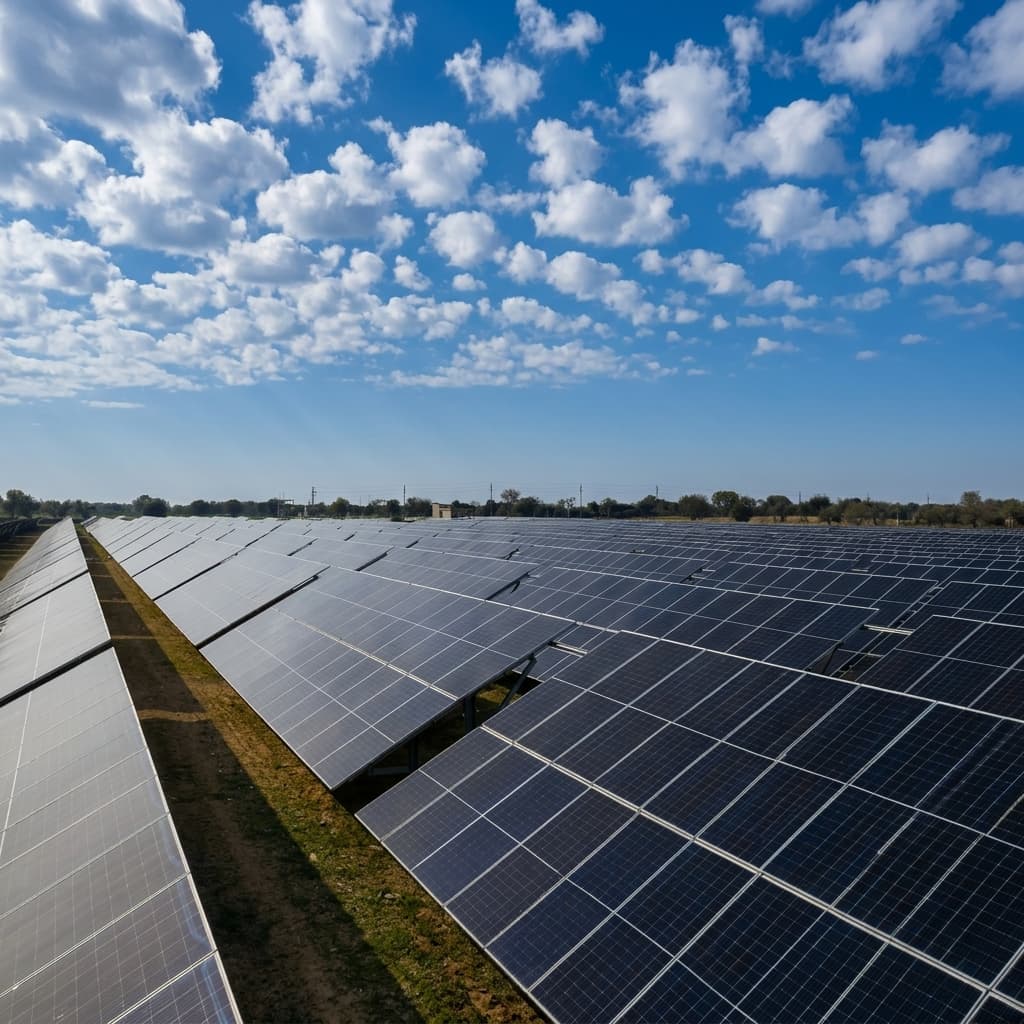
Are you ready to embrace the sunshine and transform your homes and businesses? As we know, India is taking steps towards solar power with great confidence, and government policies have made it quite easy. It presents a valuable opportunity for large industries, enterprises, and homeowners alike. Technological advancements in solar energy are attracting the market and setting new trends. In this blog, we cover the key trends regarding solar energy and why it is time to transition to renewable energy in 2025.
The Current Solar Landscape in India
India is a developing country always looking for opportunities to keep pace with the world. As we know, the world is moving forward to solar energy because of environmental concerns and cost-effective energy solutions. Over the past decade, the Indian market has undergone a transformative shift due to technological advancement, and government incentives, policy support, and schemes have scaled up solar installation exponentially.
A Promising Future: Unprecedented Growth in Installed Capacity
India will become a global leader in the field of solar energy in 2025. Our country is experiencing a rapid increase in renewable energy — as of January 2025, India has reached approximately 271.62 GW renewable project capacity, with solar power contributing approximately 47% of that total.
Our government is taking ambitious steps towards renewable energy to accelerate adaptation through initiatives like the National Solar Mission, the Production-Linked Incentive (PLI) scheme, and various solar rooftop programs. These have positioned India as a global leader in solar energy with large-scale solar parks and decentralised rooftop systems.
Government Initiatives: Powering Progress
The Indian government has set an ambitious target of achieving 500 GW of non-fossil fuel-based energy capacity by 2030, with a strong focus on solar power. Key programs driving this transition include:
Solar Park Scheme
This scheme seeks to develop 50 solar parks with a cumulative capacity of approximately 38 GW. These parks provide pre-identified land, grid connectivity, and essential infrastructure. By fostering large-scale solar installations, the scheme enhances India's renewable energy capacity and creates thousands of jobs.
Key Incentives for Solar Adoption
- MNRE Subsidies: Get up to a 40% subsidy on residential solar installations.
- State-Specific Incentives: Benefits in states like Haryana, Punjab, Gujarat, Maharashtra, and Rajasthan.
- Net Metering: Sell excess solar power back to the grid and earn credits.
- GST & Loan Benefits: Reduced GST rates (5%) and easy financing options through banks.
- PM-KUSUM: Promotes decentralised solar solutions in rural areas.
- PM Surya Ghar: Up to ₹78,000 subsidy for residential rooftop solar under the Muft Bijli Yojana.
Trends Shaping Solar Energy in 2025
1. Technological Innovations: Efficiency Meets Affordability
In 2025, exponential advancements in solar panels and their efficiency are more crucial than ever. Silicon-based panels are achieving remarkable efficiency levels averaging around 25%, and perovskite-silicon tandem solar cells are pushing past 30%. The trend is moving towards integrated solar energy storage solutions, enhancing overall energy security. Virtual power plants (VPPs) now allow users to sell stored energy back to the grid for an extra income stream.
2. Decentralised Solar Solutions: Empowering Consumers
Programs like PM Surya Ghar are making it easier for homeowners to install rooftop solar systems. Community solar programs are also playing a significant role in bridging the energy gap in rural areas, promoting economic empowerment and reducing energy poverty across the country.
3. Smart Technologies: The Future of Energy Management
The integration of AI and IoT in solar systems is revolutionising energy management. AI-driven solutions can predict maintenance needs, communicate with smart appliances, and optimize energy usage based on weather forecasts and consumption patterns — all in real time.
4. Aesthetic & Flexible Solar Solutions
Modern architecture now blends with solar aesthetics through innovative systems like:
- Solar Shingles: Integrate directly into the structure of the roof — no bulky panels.
- Transparent Solar Windows: Convert sunlight into electricity while allowing natural light in.
- Black-on-Black Panels: Offer a sleek, modern aesthetic with high efficiency.
- Solar Carports: Cover parking areas with solar panels to generate clean energy.
Customised Solar Solutions for Every Need
Divvy Solar provides tailored EPC solutions for homeowners and businesses alike, recognizing that every project has distinct requirements.
Residential Solar Solutions
Designed to maximise energy efficiency and lower costs through rooftop systems, smart energy management, and comprehensive expert support. A typical 3 kW residential system can save ₹2,500–₹3,500 per month on electricity bills.
Commercial & Industrial Solar Solutions
We provide ground-mounted solar farms, solar carports, and industrial-scale installations to meet significant energy demands while improving cost efficiency and sustainability. Industrial clients see ROI within 3–4 years on large installations.
Over the last few years, Divvy Solar has established itself as one of the best EPC providers in Haryana and Punjab, with over 1,000 successful projects.
- Complete Project Management: End-to-end from site assessment to after-sales support.
- Proven Record: Successful installations across Haryana, Chandigarh, and Punjab, now expanding to Gurgaon and Delhi NCR.
- PPA Options: Predictable energy pricing with minimal upfront cost.
- Certifications: MNRE-empanelled EPC company with DISCOM tie-ups.
Future Outlook: The Road Ahead
India is well on its way to becoming a global leader in solar power. Investing in solar today not only ensures financial savings but also contributes to a more sustainable, carbon-free future. Divvy Solar is your trusted partner in this journey — now is the time to take action and join the solar revolution!
Contact Divvy Solar today for a free site assessment and customized solar proposal.
The Future is Solar • 2025 Edition